EU-HOSTED  ·  GDPR-NATIVE  ·  ENFORCED AT RUNTIME

The control plane for enterprise AI.

AI gateway, policy engine, MCP supply-chain protection, real-time DLP and cost control — consolidated into one auditable control plane that sees and governs every AI request as it happens.

FinlandBuilt in Helsinki for regulated European enterprises — no US Cloud Act exposure.

Governing every model your teams already use

OpenAI
OpenAI
Anthropic
Anthropic
Gemini
Gemini
Mistral
Mistral
Copilot
Copilot
Perplexity
Perplexity
Why it matters
Every prompt your team sends is a data-egress event. Roder is the only place you see them all — and the only place you can stop one.
Roder
The Roder thesisRuntime control over every AI principal
The unified platform

Everything you need to govern AI at scale.

Write a rule once — it protects every team, every model and every request, from a single control plane.

01

AI Gateway

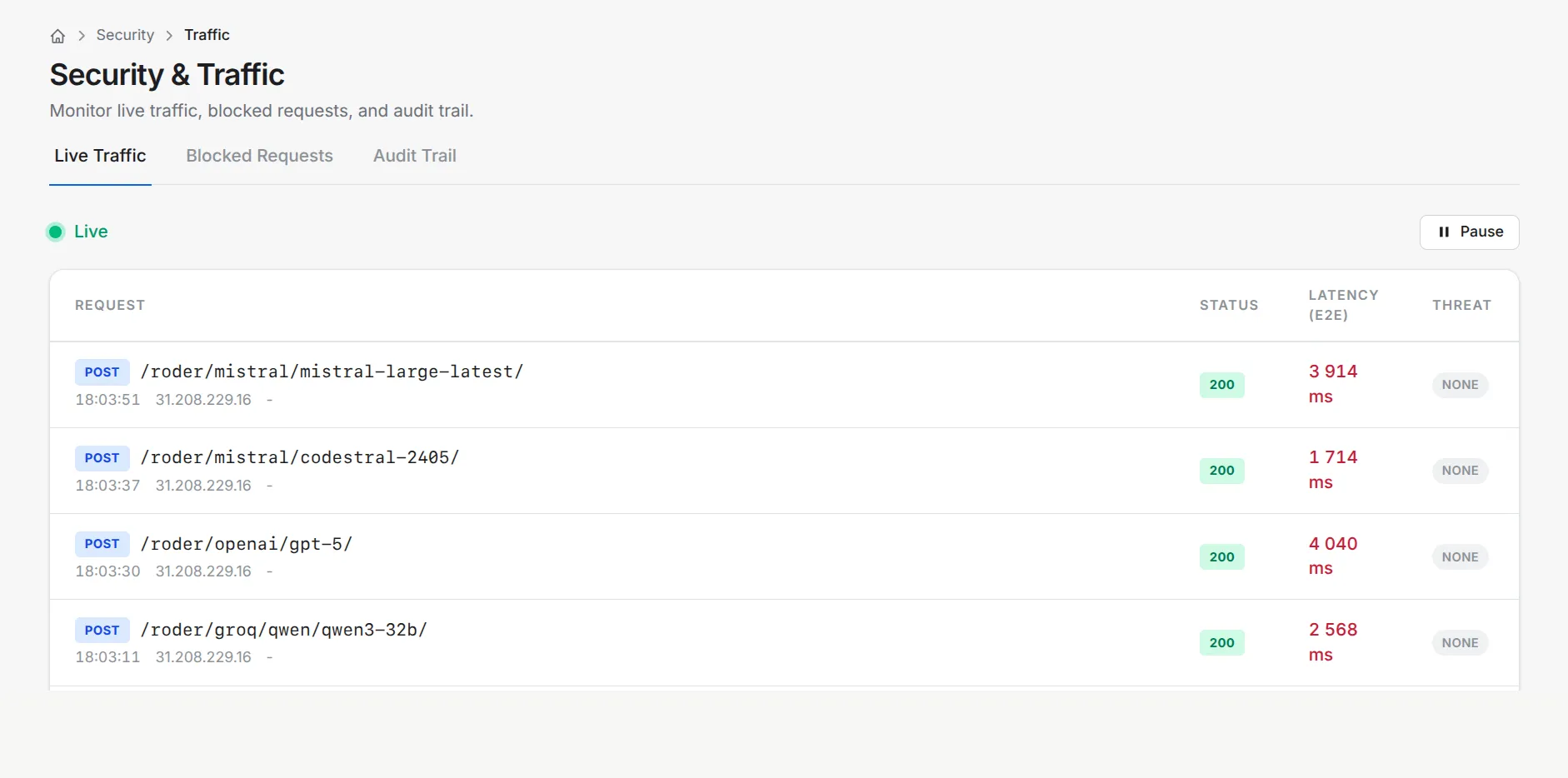
Every request from every model — chat, agents and MCP tool calls — routed through one inline enforcement point, so nothing reaches a provider unseen or unlogged.

02

Policy Engine

Composable CEL policies evaluated at runtime, versioned and testable, so the same rule protects every team and every model without a single code change.

03

Real-time DLP

PII, secrets and source code detected and redacted in flight — on every prompt and every response — before a single token crosses your perimeter.

04

MCP Protection

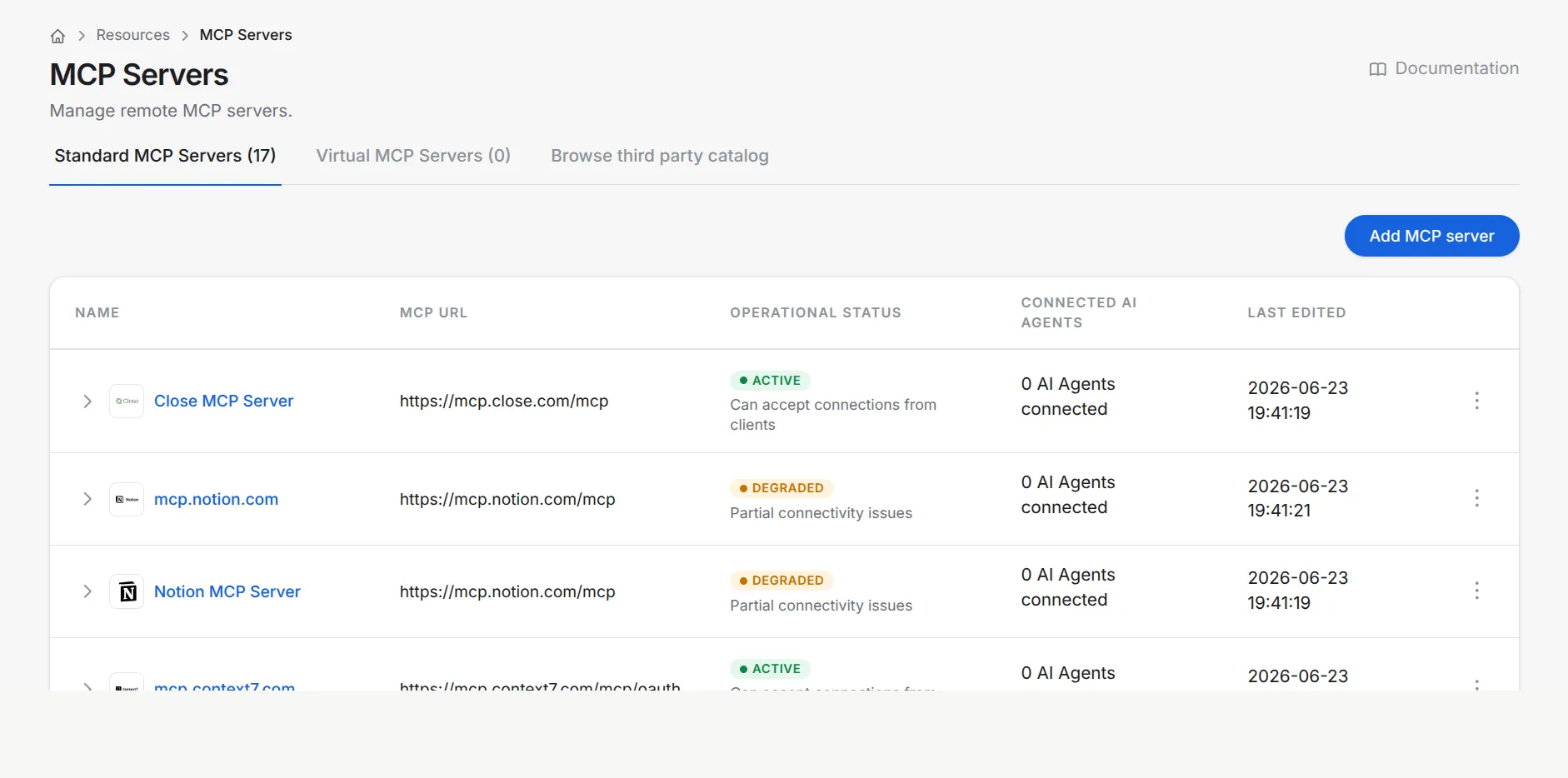
Trust graphs and lethal-trifecta detection across every Model Context Protocol server your agents reach, with policy enforced on each individual tool call.

05

Agent & MCP Security

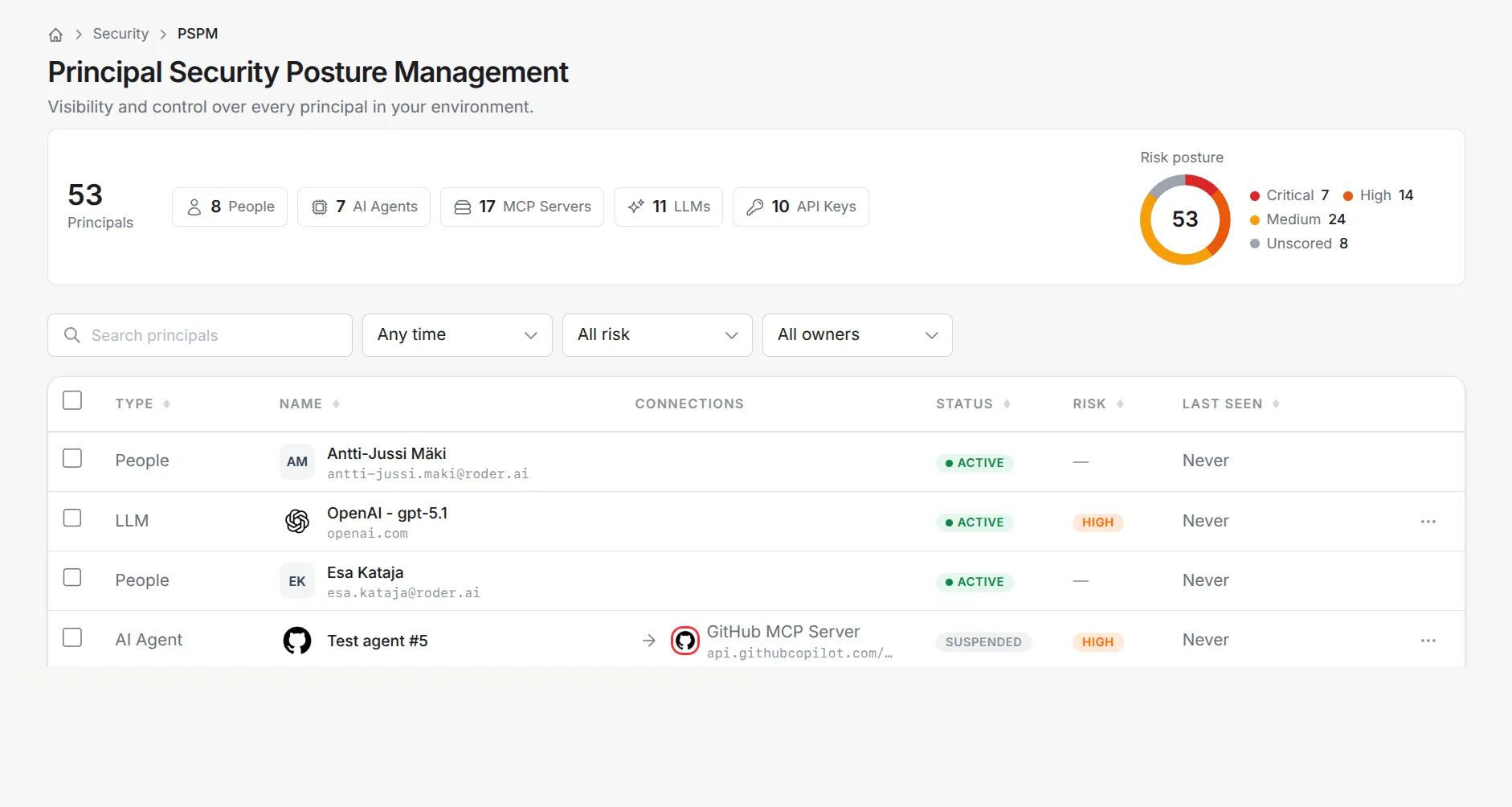
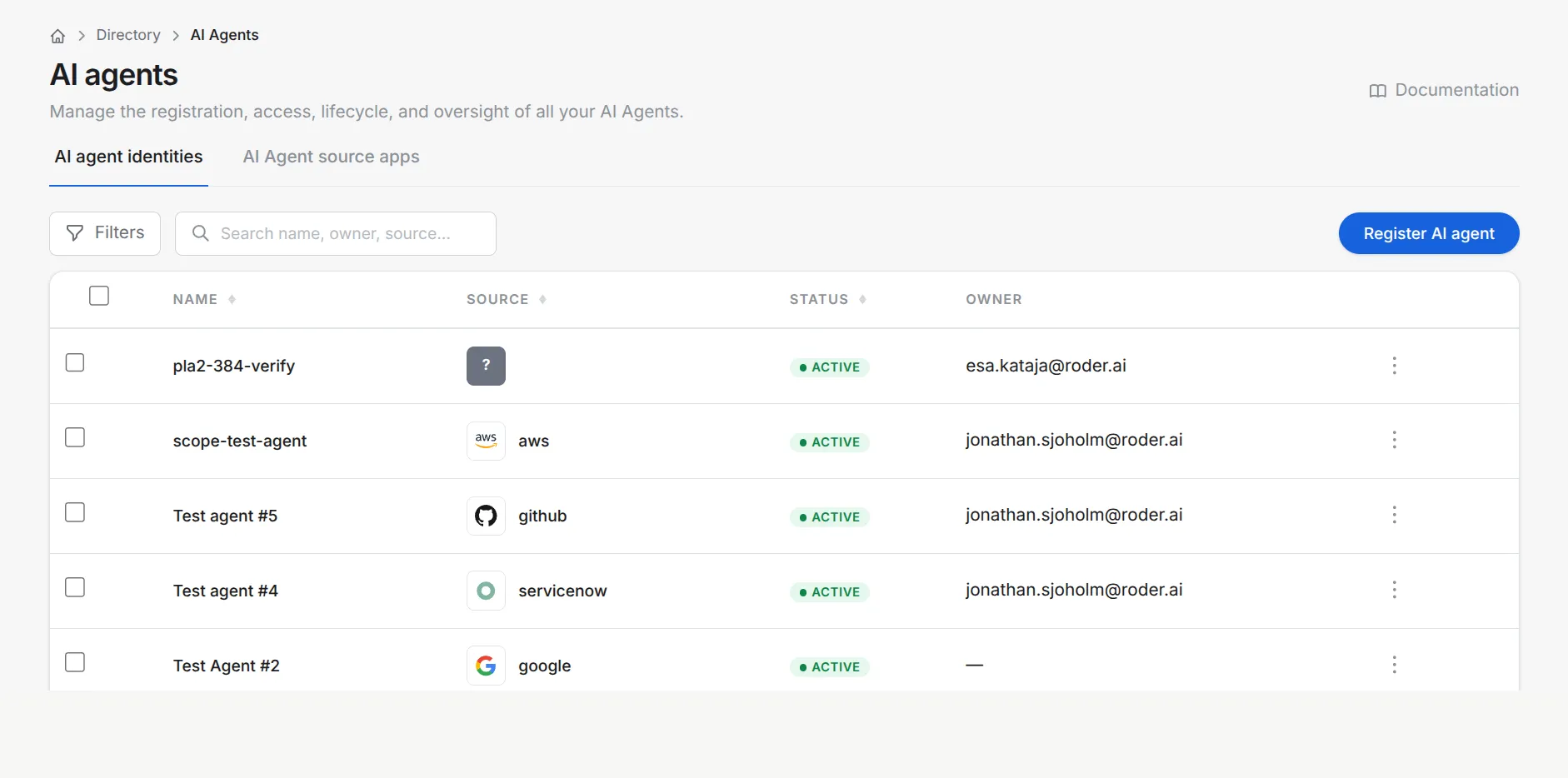
Access certifications and the full lifecycle for every principal — human and non-human — with periodic reviews, attestations and one-click revocation.

06

Cost & Budgets

Per-team token attribution, hard ceilings and a throttle mode that keeps enforcement running even after the budget is spent — security never lapses.

Connect everything

One platform, every model and tool.

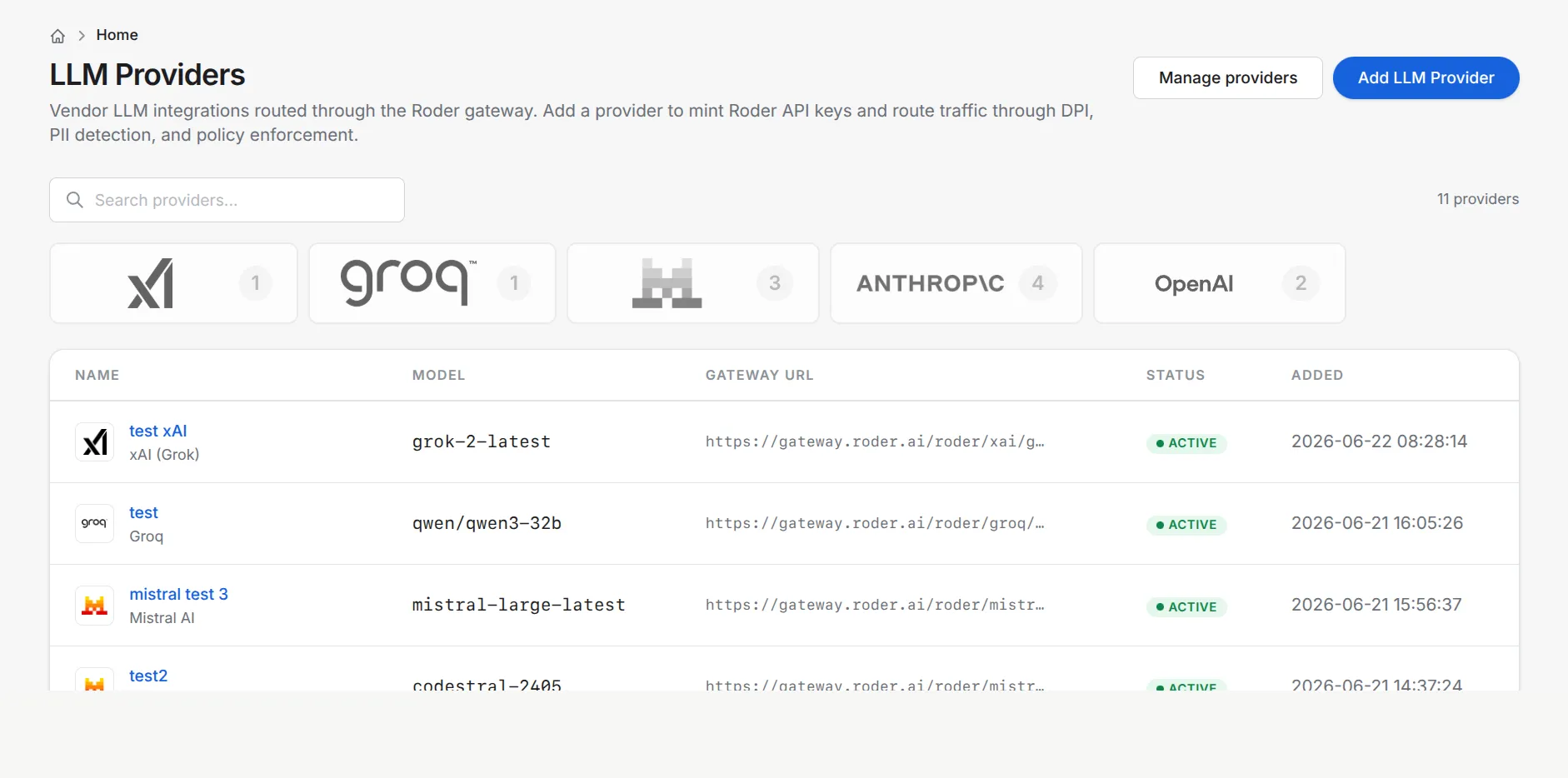
Route 2,000+ models and 500+ MCP servers & tools — OpenAI, Anthropic, Gemini, Mistral and any OpenAI-compatible endpoint — through a single control plane.

One gateway for every model and tool you run
2,000+ models · 500+ tools
Sovereign by design

100% EU-hosted.
No US Cloud Act exposure.

Built and operated in Finland, deployable as EU-hosted SaaS or fully on-premise — engineered against the regulations your auditors actually ask about.

EU
Roder AI Oy · Helsinki, Finland · EU data residency
Engineered against
GDPREU AI ActDORANIS2EHDSCRAeIDAS 2.0ISO 27001ISO 42001SOC 2 Type II

Frequently Asked Questions

Everything you need to know about the Roder control plane.

What exactly is Roder?+
Roder is a single control plane for enterprise AI. It consolidates an AI gateway, policy engine, MCP supply-chain protection, real-time DLP and cost attribution into one auditable system — deployed as EU-hosted SaaS or fully on-premise.
How is this different from a CASB or an API gateway?+
A CASB sees network metadata; an API gateway routes traffic. Roder understands AI semantics — prompts, responses, tokens, MCP tool calls and the principals behind them — and enforces policy on the content itself, in real time, with a compliance-grade audit trail.
Where is my data hosted?+
In the EU, always. Roder runs entirely on European infrastructure with no US Cloud Act exposure, and can be deployed on-premise inside your own perimeter. The company is Finnish and operated from Helsinki.
How long does it take to deploy?+
Under an hour to a first EU-hosted trial. Point your AI traffic at the gateway and requests, principals and policy decisions start appearing immediately — no agents to install on every endpoint.
Which models and tools does Roder support?+
OpenAI, Anthropic, Google Gemini, Mistral, Microsoft Copilot, Perplexity and any OpenAI-compatible endpoint — over 2,000 models — plus 500+ MCP servers and tools your agents connect to. New providers route through the same gateway with no code change.
Does Roder help with the EU AI Act?+
Yes. Roder ships compliance packs that map its controls to the EU AI Act, GDPR, DORA and NIS2, backed by an immutable seven-year audit trail — so the evidence your auditors ask for is already there when enforcement begins in August 2026.

Take back control of your AI.

Spin up an EU-hosted trial in under an hour, or talk to the team that built it. Either way, you'll see every request by the end of the day.

Engineering5 min read

Why budget caps must never disable security

Cost controls that switch off the WAF under load are not a saving. They are a vulnerability with a finance ticket attached.

Roder Engineering29 Jun 2026
← All writing

There is a tempting shortcut in every AI platform under cost pressure. When the bill spikes, you start turning things off.

AI spend is famously unpredictable. What worked for a demo at a hundred requests a day falls over when real users generate thousands of unbounded calls, so every serious gateway now ships spend limits, circuit breakers and fallback chains. That is good engineering. The danger is what gets shed first when the cap is hit, because the cheapest-looking thing to drop is almost always the security layer. DLP scanning, injection detection and policy evaluation all cost compute. Turning them off to flatten a graph trades a budget line for a breach.

Fail-open is a decision, not a default

The right pattern is well understood. Fail-open versus fail-closed should be chosen per endpoint, never system-wide. A data-retrieval path can degrade to a cached or cheaper response. A security control cannot. The failure mode that quietly bites teams is the silent one: a fallback that keeps serving traffic while the enforcement meant to inspect it has been skipped to save cycles.

When the cap hits / wrong
WAF bypassed to save cycles
DLP sampling quietly drops toward zero
Policy checks skipped under pressure
“We will re-enable it tomorrow”
When the cap hits / right
Throttle the request rate
Queue or shed non-critical traffic
Drop to a cheaper model tier
Keep WAF, DLP and policy on

“A control that switches off under load was never a control. It was a demo.”

Roder Engineering

What you can shed, and what you cannot

01

Degrade speed before safety

Throttle, queue and downgrade models freely. Never bypass enforcement to buy latency or cost.

02

Make fail-open explicit and per-endpoint

No global kill switch that takes the WAF down with the rate limiter. Each path declares its own failure mode.

03

Price in dollars, enforce in policy

A budget cap should bound spend, not security posture. They are two different control planes and must stay that way.

04

Security cost is fixed cost

DLP and injection checks are part of the request, not an optional add-on you switch off to make a month look better.

The Roder default

In Roder, budget ceilings degrade performance (request rate, model tier, concurrency) while the WAF, policy engine, lethal-trifecta defense and GDPR controls stay on when overage hits. Cost governance and security governance are separate by design, so a finance decision can never silently become a security one.

Caps that protect the bill and the business.

See how Roder bounds AI spend without ever turning enforcement off.